Buy before you sell
Bridging Loans Coffs Harbour
Sell first and move twice, or buy first and carry both for a while: bridging loans Coffs Harbour movers take out exist to make the second one possible.
We put a conservative number on the home you are selling, calculate what you would owe at the peak and what is left afterwards, and match you to a lender whose bridging terms suit your timeline.
- Peak and end debt calculated before you commit
- Open and closed bridging compared side by side
- A review date agreed at the start, not at the end
Work out your peak debt
Your loan balance, an appraisal on the home you are selling, and the price of the one you want.
What Bridging Finance Does For You
We arrange a loan that carries both properties for a defined window, so you can buy the next house before the current one has settled. The work is in the numbers either side of that window: a realistic value on what you are selling, the peak debt you would carry in between, and the end debt you live with once the sale money lands.
It suits two situations in particular. You have found the right place in Coffs Harbour and the vendor will not wait for you to list, or you are relocating and cannot line up two settlements across two markets. Both work, and they need different structures.
Working out those two numbers costs you nothing. The lender pays us a commission when a loan settles, so the arithmetic that tells you bridging is the wrong answer for your position is free, and it is one we do often.
Bridging is a timing tool rather than a cheaper loan, and it is not the right answer for everyone. If your income will not carry the end debt comfortably, we will say so and look at the alternatives instead of structuring around it.
Step by step
How We Set Your Bridge Up
Bridging moves faster than a standard purchase because the deadline usually belongs to someone else. We work to theirs.
-
Value both ends
The first day or two. A conservative figure on the home you are selling and a real one on the purchase, with duty and costs included.
-
Calculate peak and end debt
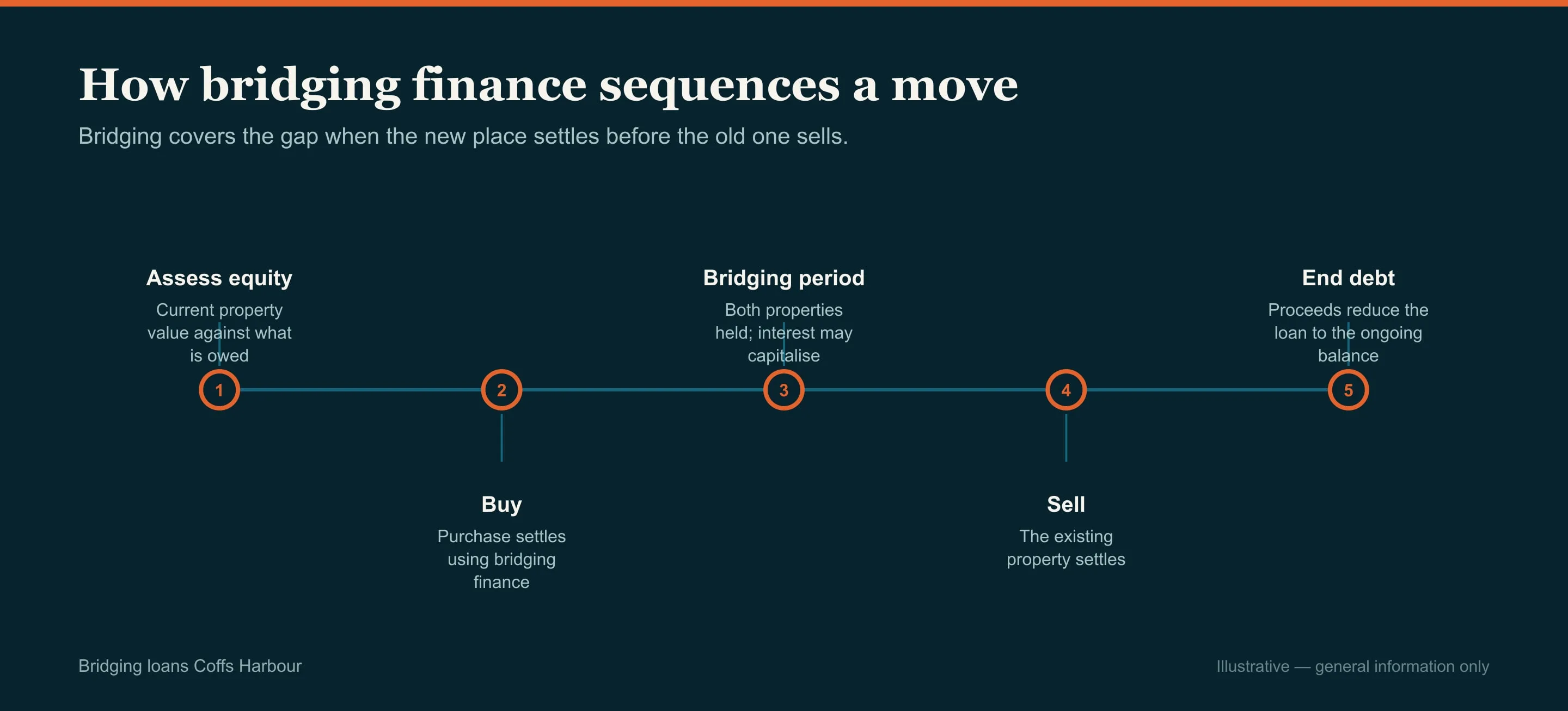
A day, once we have the figures. You see both numbers, plus what the capitalised interest adds across a realistic selling window.
-
Match a lender
Bridging terms vary more between lenders than almost anything else: maximum term, appetite for open bridging, how the end debt gets assessed. We go where yours fits.
-
Approval and purchase settlement
Commonly three to five weeks. We work to your contract date and keep the valuations moving.
-
Sale and conversion
When the old home settles, the proceeds clear the peak and the loan converts to the end debt on normal terms. We handle the discharge and the changeover.
What to have ready
- Your current loan statement and the approximate balance owing
- A recent appraisal or agent estimate for the home you are selling
- The contract or the asking price for the property you are buying
- Payslips or tax returns, and a list of your other commitments
First questions
What Movers Ask Us First
Do you charge for the bridging work?
No. A bridge is paid for the same way a normal loan is: the lender pays us a commission when it settles. Bridging files take more managing than most, and that sits with us rather than with you. If a fee ever applied to your structure, you would have the amount in writing before you agreed to it.
What do you need from me to work out whether this stacks up?
Your current loan balance, an agent appraisal on the home you are selling, and the price of the one you want. Those three numbers produce a peak and an end debt, which is enough to know whether the idea is worth pursuing before anyone fills in an application.
How quickly can you arrange a bridge?
Commonly three to five weeks to approval and purchase settlement, and we work back from the contract date you are committed to rather than to a standard timetable. The parts that stretch it are valuations on both properties, so we get those moving first.
Buying Before You Sell in Coffs Harbour
The problem bridging solves is a timing one. The vendor will not wait for you to sell, or you are relocating and cannot coordinate settlements in two markets at once. A bridge carries both properties for a defined window and lets you make a clean offer instead of one hedged with a subject to sale condition.
The first thing we do is put a realistic number on your current Coffs Harbour home, because everything downstream depends on it. Optimism there is the single most common reason a bridge gets uncomfortable, so we use a conservative figure and would rather you were pleasantly surprised at the end.
One rule that helps here
Owner occupier bridging loans are exempt from APRA’s debt to income cap, the restriction limiting lenders to no more than 20% of new mortgages at six times income or above from February 2026. Because a bridge temporarily inflates your debt against unchanged income, that exemption is what makes many of these approvable at all. We confirm it applies before we lodge.
How Bridging Finance Is Structured
Two numbers do all the work here, and we calculate both before you commit to anything.
- Peak debt: your existing loan, plus the purchase price of the new home, plus duty and costs. The highest your total borrowing gets.
- End debt: what is left once the old home sells and the proceeds are applied. The loan you actually live with afterwards.
Your lender assesses you primarily on the end debt, because that is the ongoing commitment. It still has to be comfortable with the peak, though, and that is where most Coffs Harbour bridging applications either work or do not.
Interest usually capitalises
On most bridging loans you make no repayments on the peak debt while the bridge runs. The interest is added to the balance instead and settled when the sale completes. That keeps your cash flow manageable while you are carrying two Coffs Harbour properties, and it means the longer the bridge runs the more it costs. We show you that number against a realistic sale timeline before you decide.
Open or closed
A closed bridge is one where your existing Coffs Harbour home is already under an unconditional contract, so the end date is known. An open bridge is where it is not yet sold. Closed bridging is easier to approve and generally on better terms; open bridging is what you need when the new place came up first. We tell you which one your situation is and what it changes.
How long a bridge is allowed to run
Six to twelve months
The window to sell the old home before the bridge has to be cleared. Interest usually compounds on the peak debt across it, so the term is a cost decision as much as a timing one.
Lender bridging policy, indicative, confirm per lender
What Happens If Your Home Sells Late
This is the question worth asking at the start rather than at month ten. Bridging loans run for a maximum term, commonly six to twelve months depending on the lender, and that is the window you have to sell your Coffs Harbour home in.
If the sale runs past it, the peak debt has to be cleared another way: refinancing the whole position onto a standard loan, or meeting the Coffs Harbour market on price. Neither is a disaster, and both are considerably easier if the conversation happens at month four.
So we build the timeline on evidence rather than hope. CoreLogic’s February 2026 figures had houses in Coffs Harbour selling in around 42 days and units around 46. We work from that kind of number, add a margin for the time it takes to prepare and list, and check the term you are offered covers it comfortably.
We also agree a trigger point with you at the outset: a date by which, if there is no contract on the old place, we sit down and look at the alternatives. It is a far better conversation to have on a schedule than under pressure.
Relocating To Coffs Harbour From The City
Relocating from Sydney or Newcastle creates a specific version of this problem. You are buying into one market while selling in another, with two sets of agents, two settlement conventions and no ability to line the dates up.
Metro equity usually makes the arithmetic work, because the end debt after a city sale is often modest against a purchase here. What equity does not solve is the sequencing, and that is what the bridge is for. We handle the finance so you can bid in Coffs Harbour without a subject to sale condition weakening the offer.
If you are downsizing rather than relocating, bridging is one option and releasing equity from the home you already own is another. They suit different plans, and we would rather run both than assume which one you want.
Asked and answered
Questions About Bridging
Can I really buy before I sell?
Yes, that is exactly what bridging finance is for. The lender carries both properties for a defined window while your existing home is marketed. What decides whether it is approvable is the end debt after the sale, so that is the number we calculate first.
What is peak debt?
The highest your total borrowing reaches: your existing loan, plus the new purchase price, plus duty and costs. It is the amount you carry between the two settlements. End debt is what is left once the sale proceeds have been applied.
How long can a bridge last?
Commonly six to twelve months, with the exact maximum depending on the lender. Because interest usually capitalises rather than being repaid monthly, a longer bridge costs more, so we check the term you are offered against a realistic selling timeline before you sign.
What if my old home does not sell in time?
The peak debt has to be cleared another way, usually by refinancing onto a standard loan or by adjusting the price. We agree a review date with you at the start so that conversation happens while the options are still open rather than in the final month.
Who you deal with
Someone To Ring When The Dates Move
Bridging is the kind of finance where a settlement date shifts and three things have to change at once. Having one broker who knows both ends of your position is what keeps that to a phone call rather than a week.
We are based in Coffs Harbour, and if you are buying here from Sydney or Newcastle we are used to running the local end while you deal with the agents at the other.
- What it costs to ask
- Nothing. Working out your peak and end debt is free, and the lender pays us on settlement.
Where to start
Put A Number On It Before You Bid
Peak debt and end debt are what decide whether buying first is sensible or stressful, and they take one conversation to work out. Call us, or use the form with the three figures above.